
Killer Questions
Hundreds of questions were tested in my innovation workshops. These are the ones that survived. What they are, how to run them, and where they came from.
Killer Questions
Better ideas don't come from thinking harder.
They come from being asked a better question.
What it is
A question you can't not answer
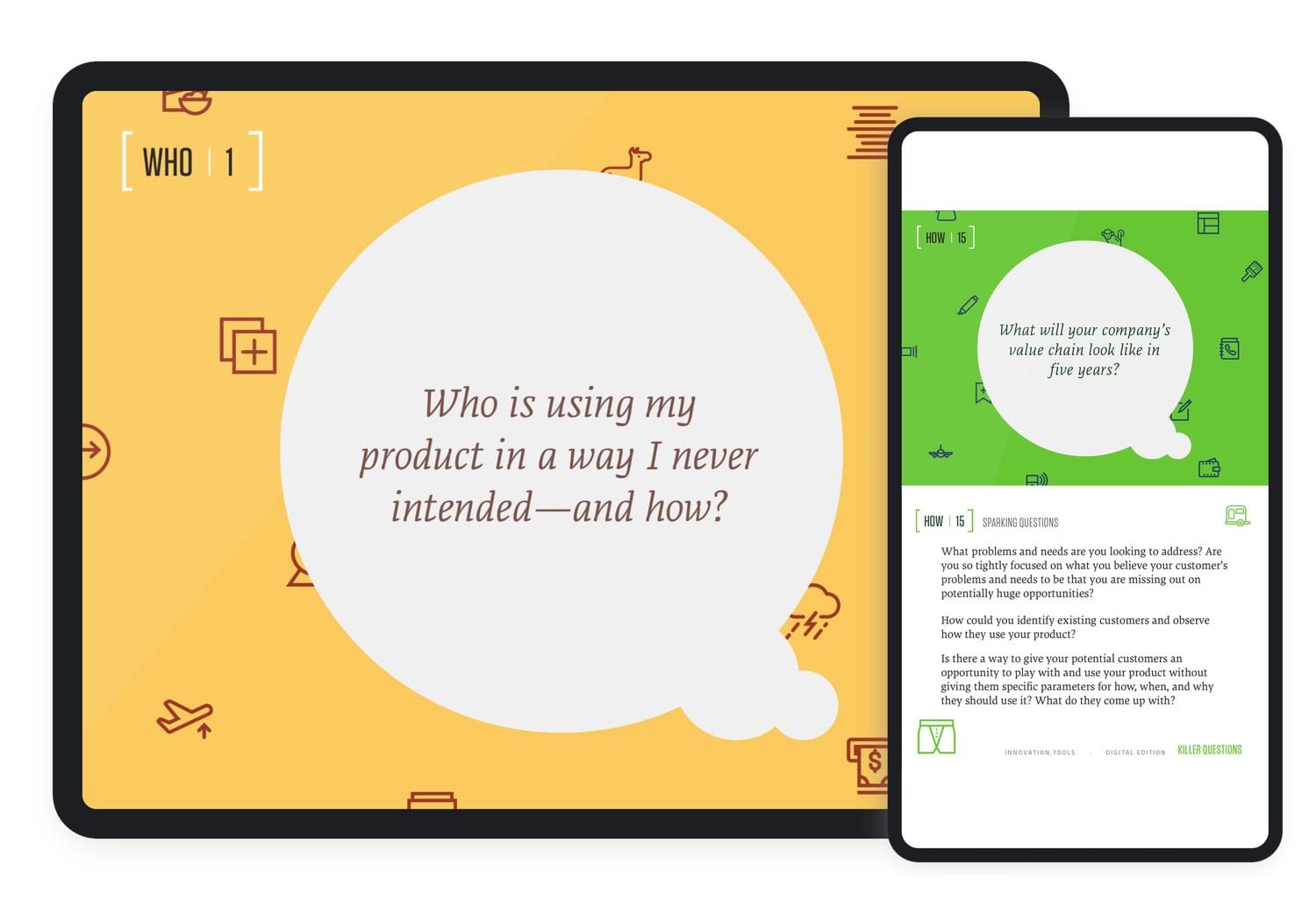
"Questions have a unique property. Once you've been asked a question, you can't stop yourself from answering it."
From the deck
That property is the whole mechanism. Ask yourself a well designed question and your subconscious goes to work on it whether you want it to or not. It offers up answers you never would have considered, because you never would have gone looking for them.
A killer question is one that has been tested and proven to spark breakthrough ideas. I built this set the slow way.
I designed structured tests into the innovation workshops I was running: specific questions put in front of specific groups, and a record of what each one produced. The rule for keeping a question was whether it triggered something in that room. Did anybody walk out seeing their customer, their product, or the way they work differently than when they walked in? If nothing moved, the question was cut. If there was a good idea underneath one and I had simply worded it badly, I rewrote it and ran it again the following week.
There were hundreds of questions. Most did not survive. What's on this page is what did.
The structure
Three places to aim a question
Every question in the deck points at one of three things. The color on the card tells you which.
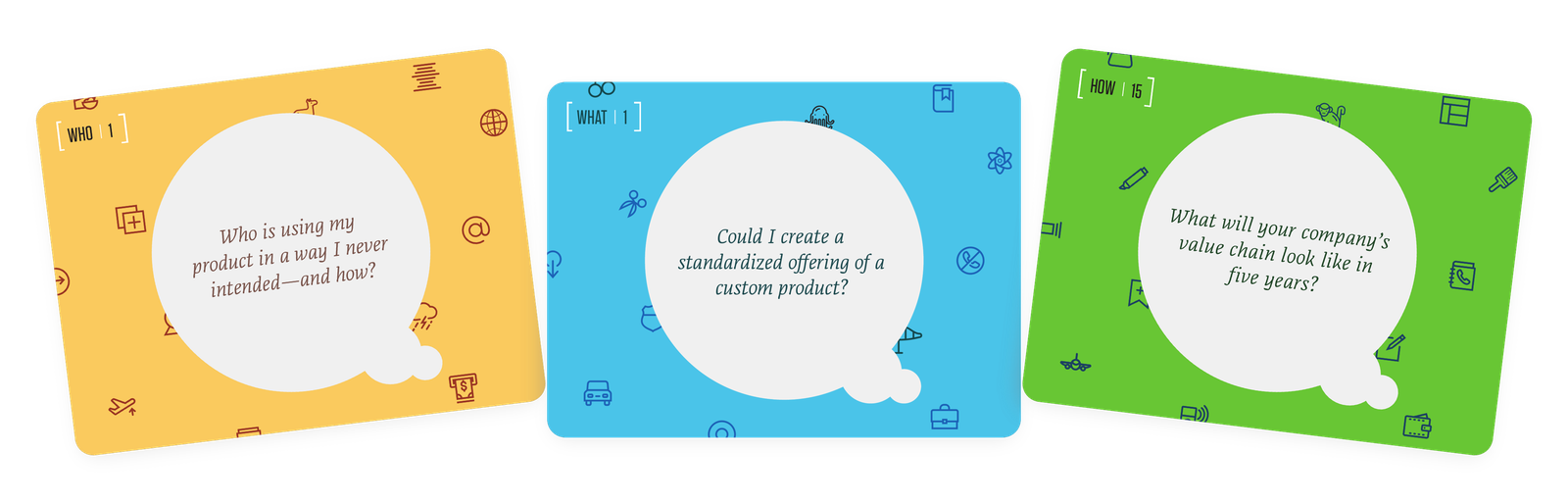
The person or organization that will benefit from your idea. Your customer, usually. Not always.
The product, service or solution that creates the value for the WHO.
The way your organization creates, delivers and supports the WHAT for the WHO.
On the reverse of every card is a set of sparking questions. They're there for when the first question lands and you want to keep digging.
How to run them
Two ways to start
Both of these come straight off the cards. Neither takes preparation. Pick one and go.
On your own
About 90 minutes
- Pick a category, WHO, WHAT or HOW, and choose one question at random.
- Set a timer for 30 minutes and generate as many ideas as you can against that question. No judgment. Capture everything.
- Choose a question from one of the other two categories and do it again.
- Repeat until you've worked one question from each of WHO, WHAT and HOW.
- Go back through everything you generated, rank it, and pick the top three to start on.
With a team
About two hours · four people or more
- Break the room into groups of four to six.
- Assign each group a category: WHO, WHAT or HOW.
- Each group selects one question from the category it was given.
- Set a 45 minute timer and challenge the groups to generate as many ideas as they can.
- Each group picks its best three or four and presents them to everyone.
- As a team, rank everything presented and pick the top two to start on.
One thing worth knowing. The icons scattered on the front of each card aren't decoration. They're there to knock your thinking sideways when you get stuck on the question itself.
Where they came from
It started in a traffic jam
Bangkok, late 1994. I was in the back of a limo that hadn't moved in a while, with 28 minutes to get to a meeting across the city. I gave up, got out, and hired a motorcycle taxi. It got me there.
What stayed with me wasn't the ride. It was that somebody had taken a service everyone already understood and pointed it at a customer nobody was serving. I wrote a question on a blank index card that night: who is passionate about my product, or something it relates to? Then I kept going.
Over the next stretch the walls of my home office filled up with them. Index cards, scrawled, stuffed in shoeboxes or pinned up where I could see them. Eventually there were too many to be useful, which is the point at which a pile has to become a system. I stripped it down to the questions that actually worked and organized what was left into WHO, WHAT and HOW.
The index cards
Questions collected one at a time during my first retirement, tested in workshops, kept or discarded on whether they produced anything.
Beyond the Obvious, 2012
The book that put the questions in front of a wider audience, alongside the FIRE method: Focus, Ideation, Rank, Execution.
The card deck
The questions off the page and onto laminated cards, so they could go into a room and get used instead of read.
The digital edition, 2026
42 cards for tablet and phone. Same questions, same sparking questions on the reverse, now in your pocket.
If you want the questions
Three ways to get them
All three live at Innovation Tools, my store. This page stays free either way.
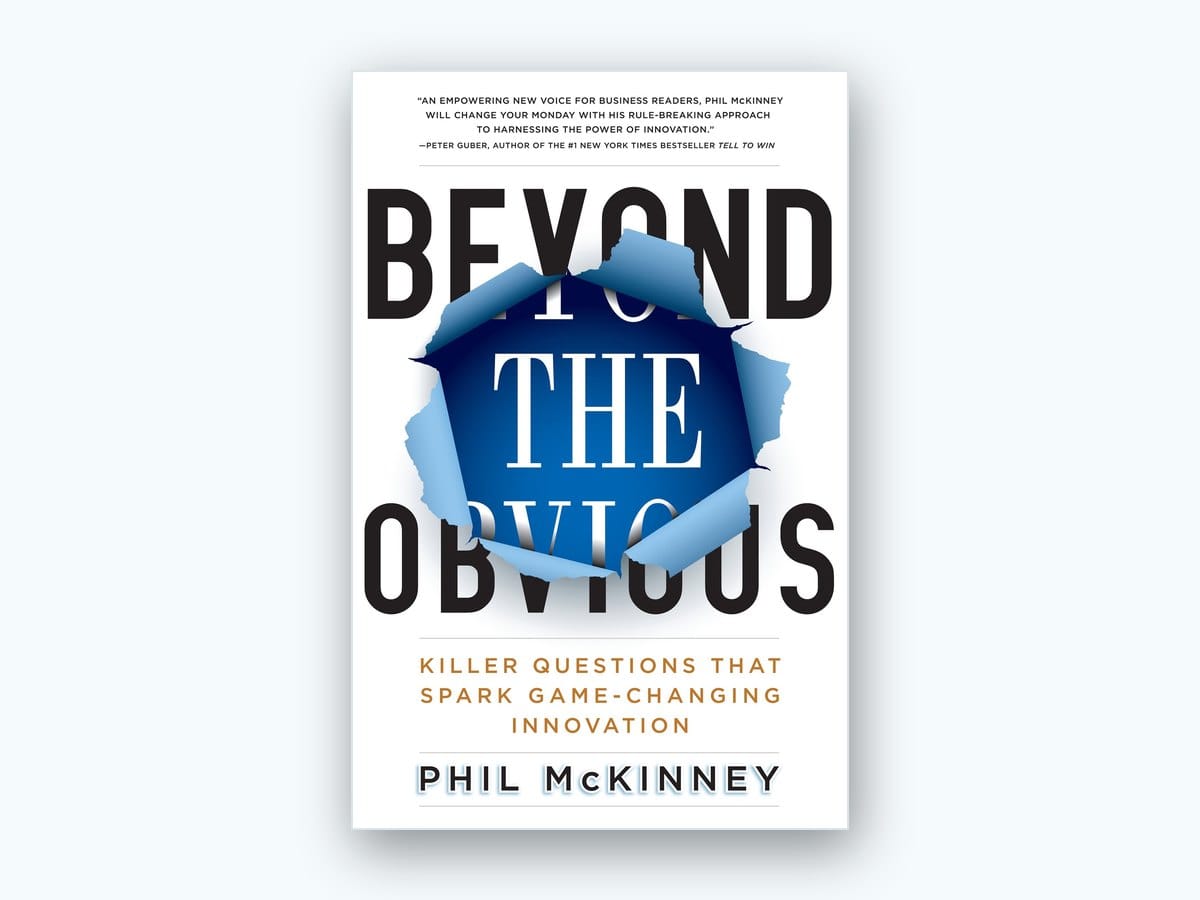
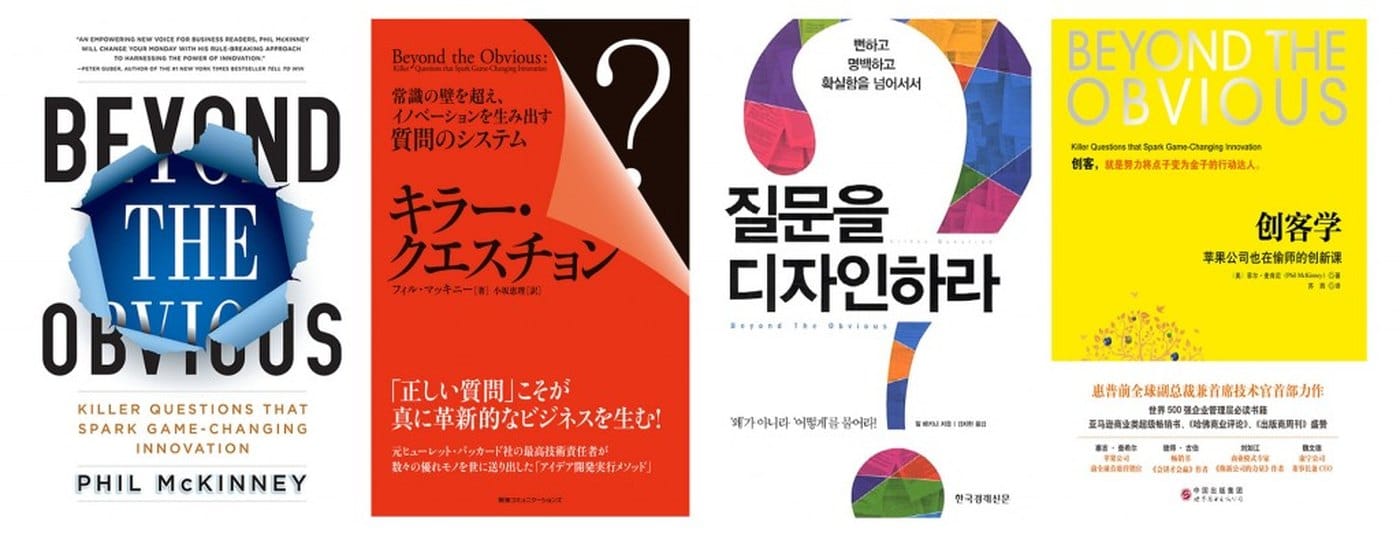
Beyond the Obvious
The full method, the reasoning behind the questions, and the stories from the decisions they came out of. Hardcover, 272 pages, published by Hachette.
$24.99 · Hardcover
Get the book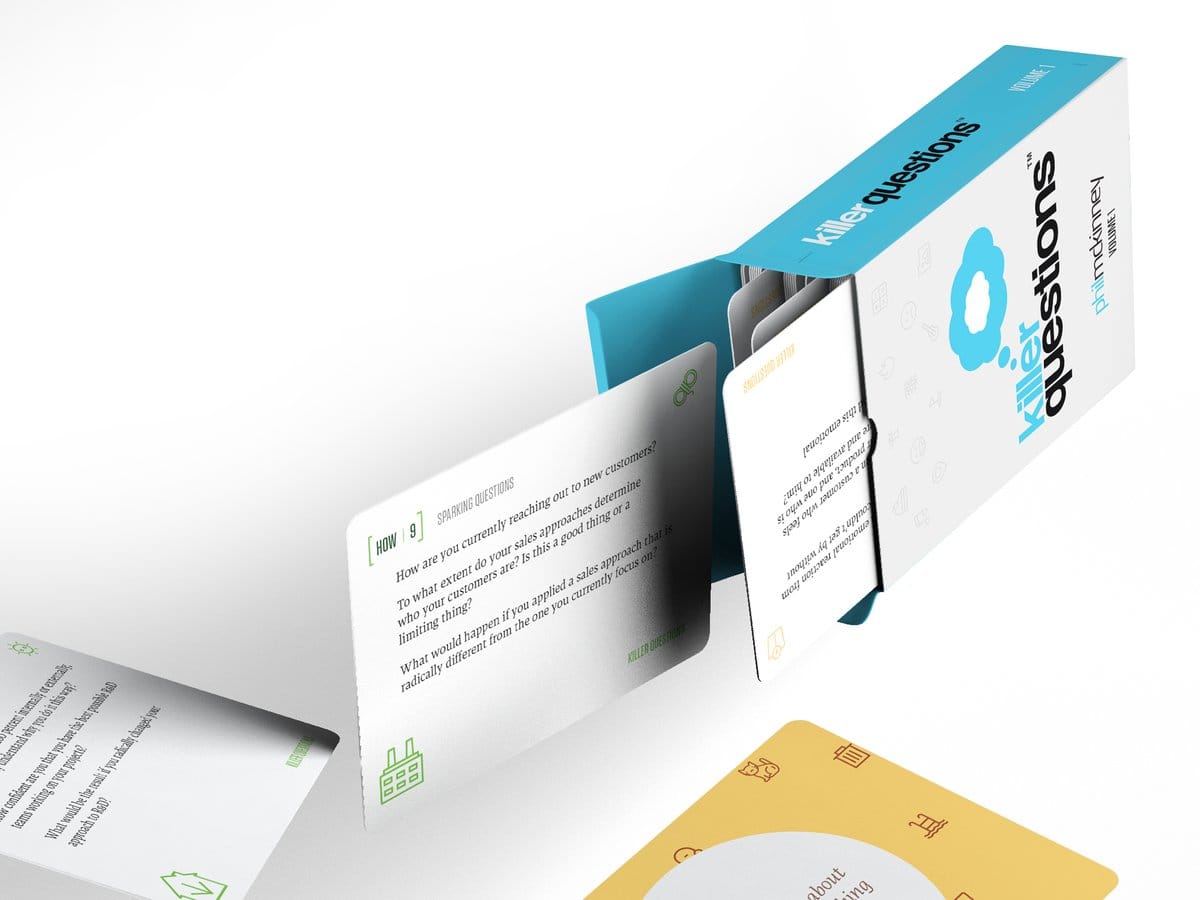
The card deck
Laminated 4″ by 3″ cards on 310gsm stock, in a box, made in the USA. The version you put on the table in front of a team.
$24.99 · Physical
Get the deck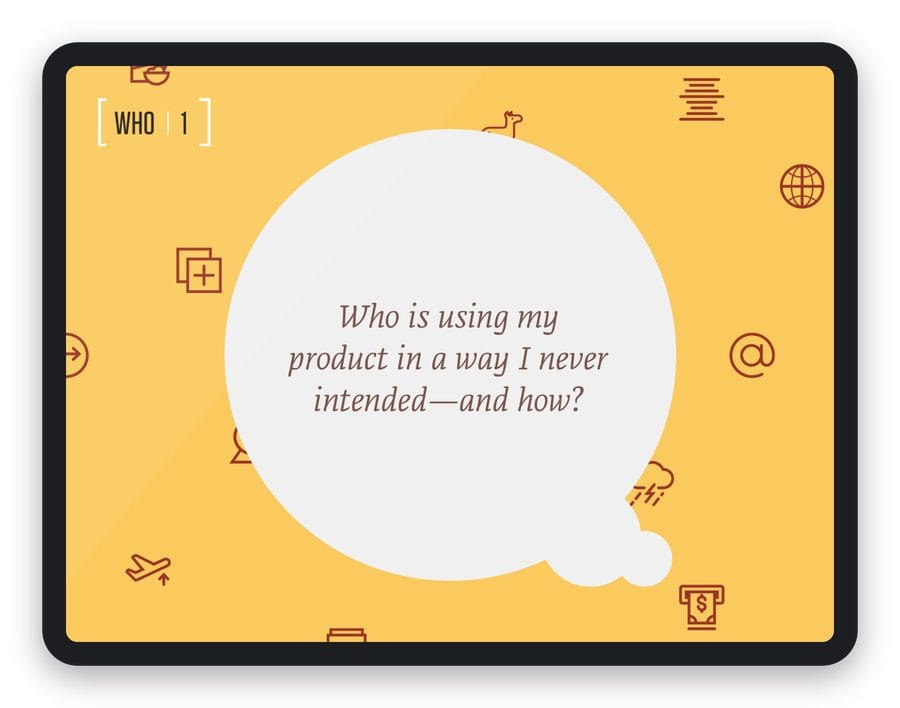
The digital edition
All 42 cards, with each question and its sparking questions on screen together. Tap to jump between WHO, WHAT and HOW. Works on tablet, phone and desktop.
$9.99 $7.49 with CARD25 · Digital download
Beyond the Obvious is also on Amazon in hardcover, Kindle and audio. That is an affiliate link.
What happens next
New questions, new exercises
I'm still testing questions and still adding them. Exercises and worked examples land on this page as they're ready.
Running these with a team and something isn't landing? Tell me about it. I read everything.